French
  Arabic
  German
  Russian
  Dutch
Dutch  Portuguese
  Turkish
  Spanish
  Italian
Wet Shotcrete Machine Market 2026 – Tunnel and Mining Projects Drive Global Growth
Market to reach $4.24 billion by 2032. Automated wet shotcrete production hits 8,182 units in 2025. Tunnel construction remains the largest application.
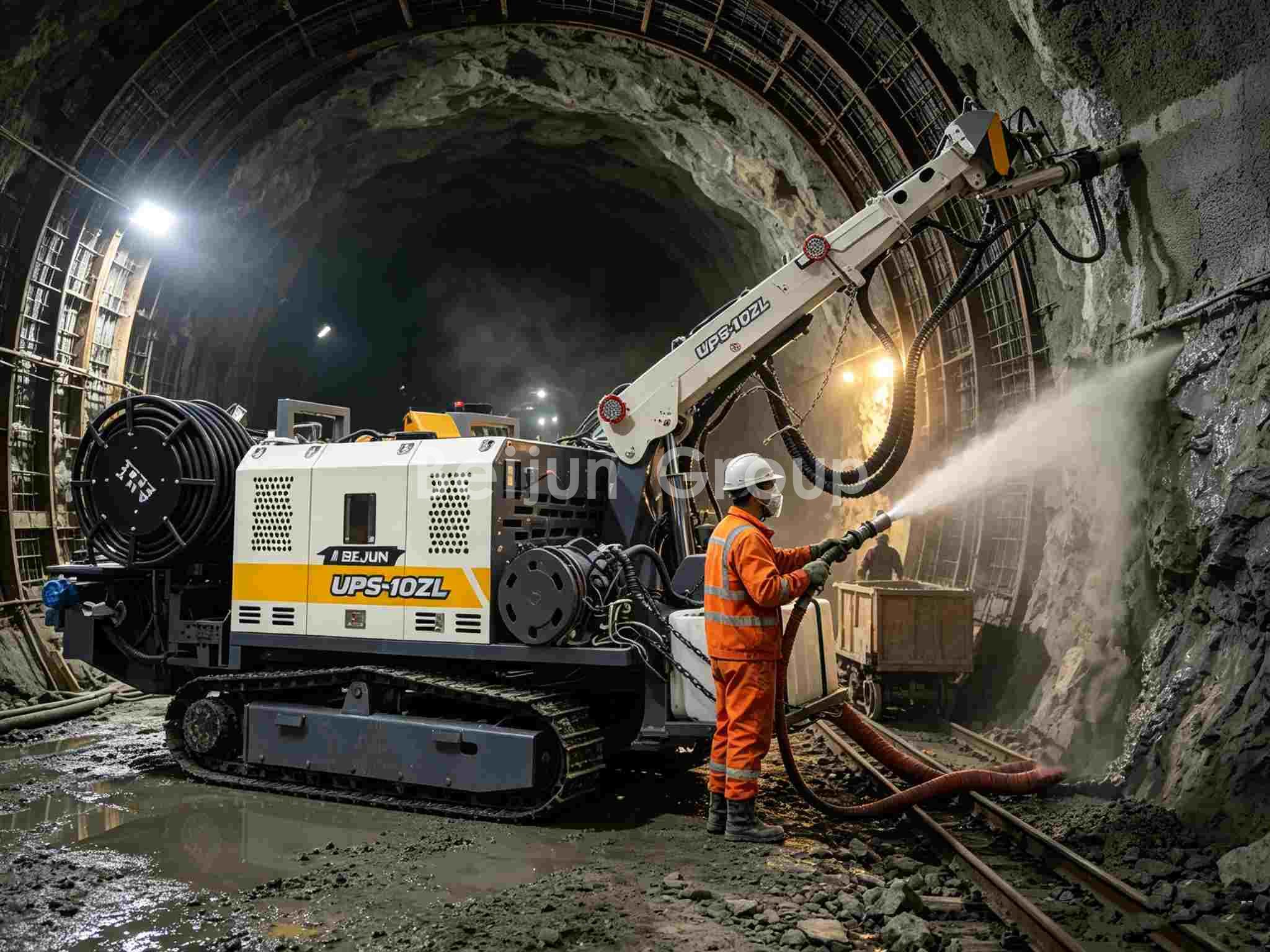
The wet shotcrete machine market is growing steadily. Infrastructure projects are expanding. Mines are going deeper. Tunnel construction is accelerating. All of these trends drive demand for better concrete spraying equipment.
Here is what is happening in the wet shotcrete machine market right now.
Market Growth – Steady Demand, Increasing Automation
The global tunnel wet spray trolley market was valued at $280 million in 2025. It is expected to reach $424 million by 2032, with a CAGR of 6.1% from 2026 to 2032.
The broader automated wet shotcrete machines market is also growing. In 2025, production reached approximately 8,182 units, with an average global market price of around $165,000 per unit. Global production capacity was approximately 10,909 units. The market is expected to grow from $1,321 million in 2025 to $2,137 million by 2032, at a CAGR of 7.2%.
What is driving this growth? A few key factors.
Infrastructure investment. Rail tunnels, highway tunnels, metro expansions, and underground utility corridors are being built around the world. China is spending an estimated 8-10% of its annual infrastructure budget on tunnel construction and renovation. India's new infrastructure plan includes over 500 km of new tunnels. Europe has committed €200 billion for rail tunnel upgrades .
Mining sector demand. Underground mining operations need shotcrete for tunnel lining and rock surface reinforcement. Deeper mines mean more support work. The mining industry accounts for about 35% of global wet shotcrete demand.
Replacement of manual methods. Labor costs are rising. Safety regulations are stricter. Contractors are switching from manual spraying and small machines to automated wet shotcrete systems. Wet shotcrete machines offer higher efficiency, better uniformity, lower rebound, more precise accelerator metering, and safer operation in confined underground spaces.
Key Trends Shaping the Industry
Automation and remote control. Manufacturers are focusing on improving boom positioning accuracy, spray control, pumping stability, and accelerator metering precision. Remote control capability is becoming standard. Electric drive configurations are gaining ground .
Equipment diversification. The market offers various machine types: wheeled, crawler, rail-mounted, and self-propelled units. Crawler-mounted units are preferred for rough terrain and underground conditions. Wheeled units are faster for projects that require frequent relocation.
Emerging markets. Southeast Asia, India, the Middle East, and Africa are seeing growing demand. Major infrastructure projects in these regions are driving equipment purchases .
Digitalization. Smart control systems with data logging capabilities are becoming standard. These systems track spray thickness, accelerator dosage, and equipment performance. Data helps operators maintain quality and predict maintenance needs.
Major Projects and Equipment Demand
Real-world projects confirm the strong demand for wet shotcrete equipment.
Liangshan Mining Hongnipo Copper Mine, China. This project recently achieved a key breakthrough with the full connection of the west mining area access ramp. The ramp now allows large equipment including drill jumbos, wet shotcrete machines, bolting jumbos, and loaders to reach work faces directly. Material transport efficiency is expected to increase by more than 40% .
Recent procurement activity. In early 2026, a tender for concrete wet shotcrete machines for the Hongnipo Copper Mine attracted multiple Chinese suppliers. Bids ranged from $1.62 million to $1.70 million for a single machine, reflecting the high value of this equipment .
Another recent project. A reservoir project in Sichuan Province, China, also awarded a contract for a concrete wet shotcrete machine in February 2026 .
Competitive Landscape
The wet shotcrete machine market is served by a mix of international and Chinese manufacturers.
Global players include SANY (Putzmeister), Aliva, Normet, Epiroc, Zoomlion (CIFA), and MacLean Engineering. These companies dominate the premium segment with advanced automation and remote control features.
Chinese manufacturers are gaining market share. Key players include China Railway Construction Heavy Industry, Hunan Wuxin Tunnel Intelligent Equipment, Jiangxi Siton Machinery Manufacturing, Sichuan Lanhi Intelligent Equipment, and others .
Chinese manufacturers are competitive on price while improving technology. They are expanding into export markets, particularly in Southeast Asia, the Middle East, and Africa.
What This Means for Buyers
If you are in the market for a wet shotcrete machine, here is what I think matters.
Consider automation. Remote control and smart monitoring systems are becoming standard. They improve quality, reduce waste, and improve safety. The cost difference is smaller than it used to be.
Match the machine to your project. Wheeled units are faster for relocation. Crawler units are better for rough terrain and underground conditions. Rail-mounted units are best for projects with rail infrastructure .
Think about output. Machines range from low output (≤20 m³/h) to ultra-high output (>40 m³/h) . Choose based on your project scale and production targets.
Check power options. Electric, diesel, and hybrid models are available. Electric models are quieter and cleaner. Diesel models offer more power for remote sites. Hybrid models provide flexibility.
Look at service support. Parts availability and technical support are critical. Chinese manufacturers are building service networks overseas. Ask about response times and parts delivery for your region.
Consider total cost. The average global market price in 2025 was around $165,000 per unit .But prices vary widely by specification. A basic unit may cost $100,000. A fully automated unit can exceed $200,000. Compare total cost of ownership, not just purchase price.
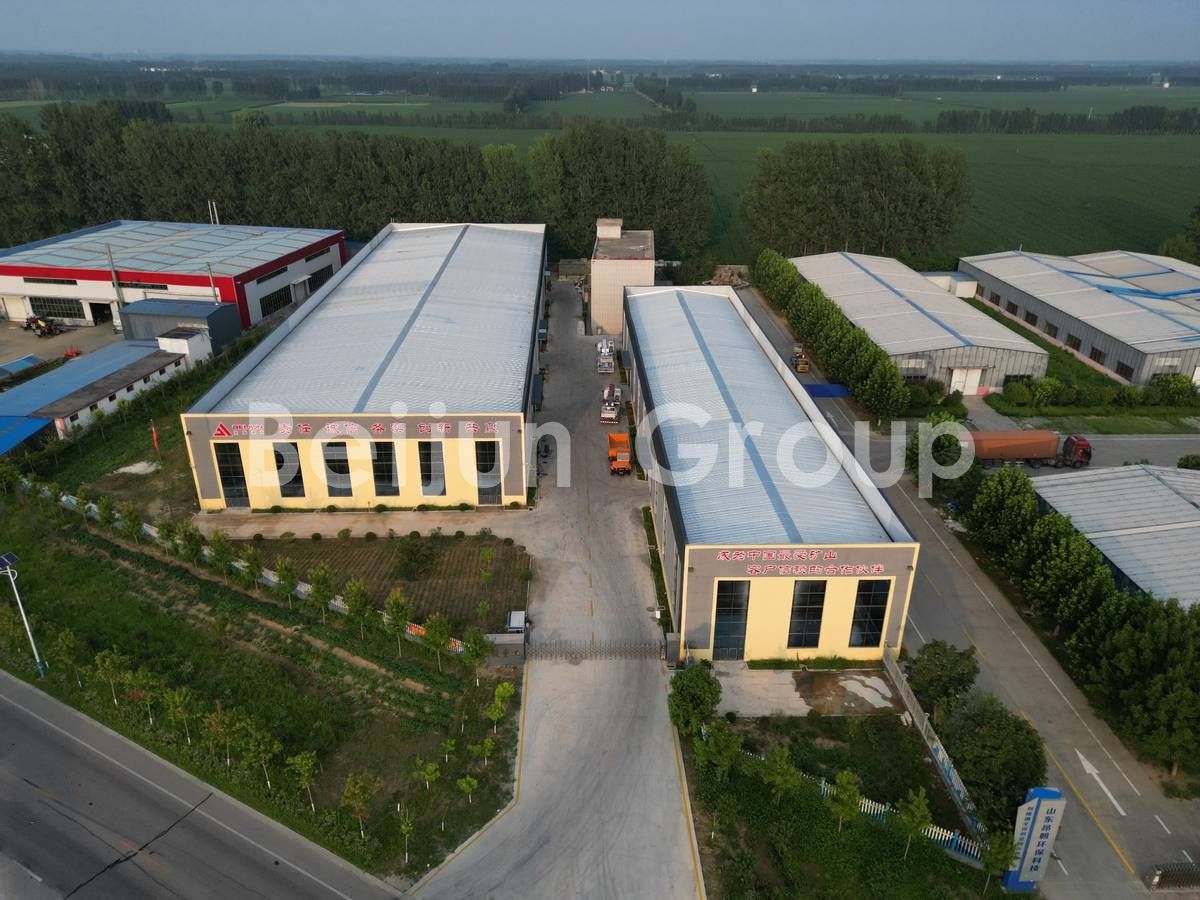
Why Beijun?
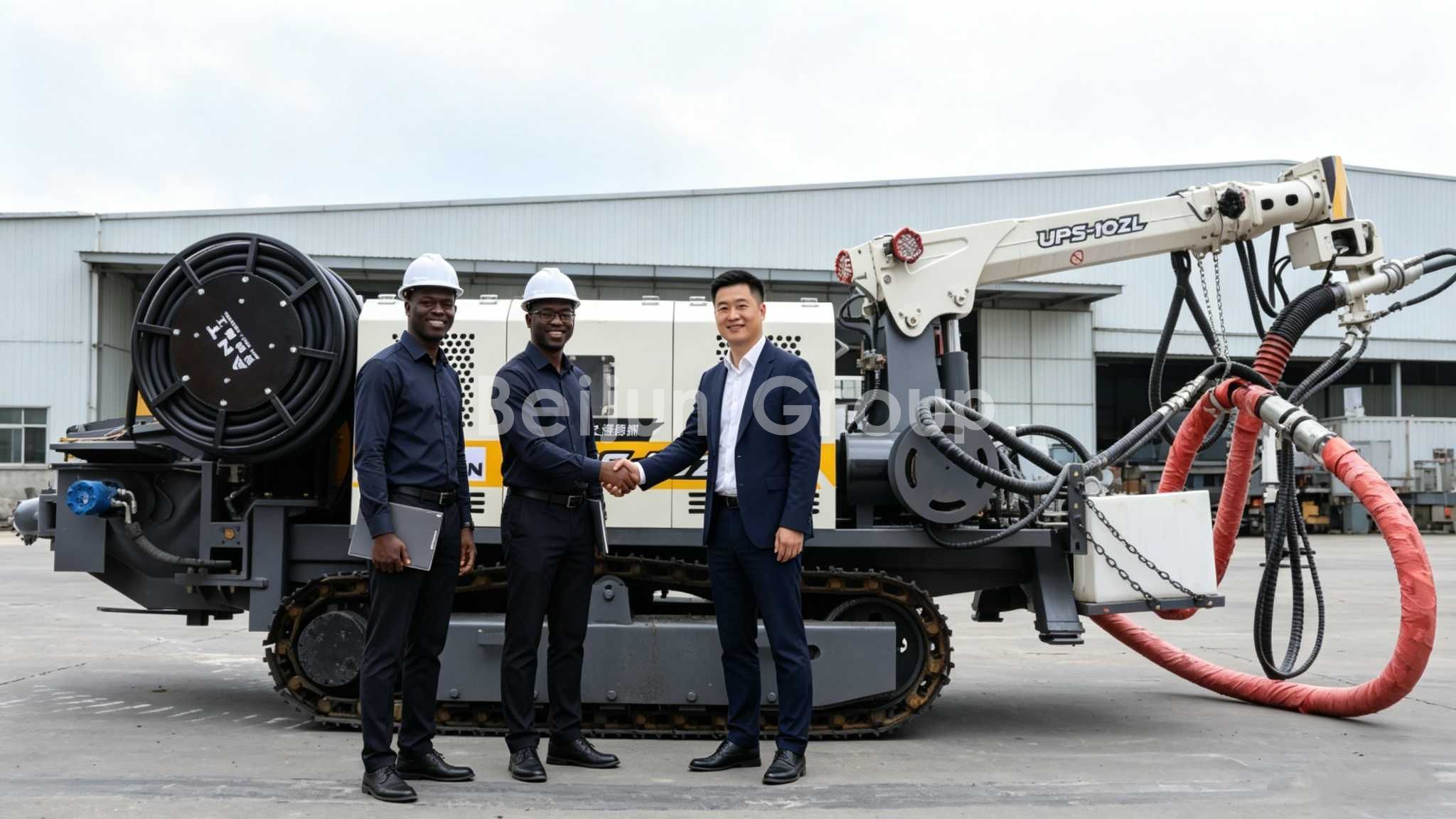
Beijun Group is a comprehensive manufacturer integrating R&D, production, and sales with over 500 employees and 50+ technical staff. The company's products are certified with ISO9001, CE, and KA mine safety certifications.
Proven reliability. Beijun equipment has been tested in extreme conditions from Angola to Pakistan.
Global support. Technical support, parts delivery, and video guidance help customers overcome distance challenges.
Cost-effective. Premium features at competitive prices deliver better return on investment.
Customization. Beijun works with customers to configure machines for specific tunnel sizes, power supplies, and rock types.
What This Means for Buyers
If you are considering a wet shotcrete machine, here is what matters.
Look for compact design. The Angola project proved that 3.2m tunnel capability is not just a spec—it is a real-world requirement. Beijun's machines meet that standard.
Consider automation. Remote control and smart monitoring systems improve quality, reduce waste, and improve safety. The cost difference is smaller than it used to be.
Check output capacity. Beijun machines deliver reliable output for both tunnel and mining applications. Match the machine to your project scale.
Think about support. Parts availability and technical support are critical. Beijun's global service network includes video guidance and remote troubleshooting.
Consider total cost. Beijun machines offer premium features at competitive prices. Compare total cost of ownership, not just purchase price.
Beijun Group manufactures wet shotcrete machines, underground dump trucks, rock drilling jumbos, and a full range of mining and construction equipment. Contact us for a customized solution for your project.
Contact Beijun Group
Email: beijun@beijun-group.com
Phone: +86 17854788133
Website: www.beijun-group.com